
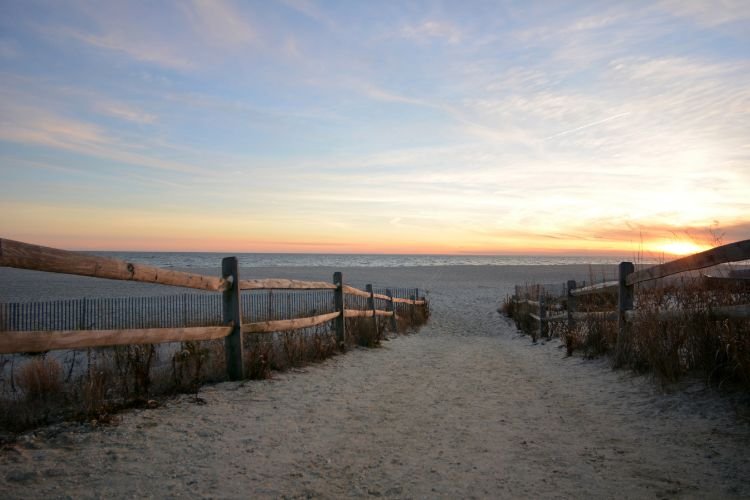
At land’s end, movement becomes visible
Why Birds Choose Cape May
A map explains the first part of Cape May’s bird story. The peninsula narrows toward the south. Migrating birds moving along the coast can become concentrated near its end. Habitat and weather complete the story. What looks like magic in the field is geography brought to life by wings.
A map explains the first part of Cape May’s bird story. The peninsula narrows toward the south. Migrating birds moving along the coast can become concentrated near its end. Habitat and weather complete the story. What looks like magic in the field is geography brought to life by wings.
01
The funnel of the peninsula
Coastlines guide movement. Birds that prefer to remain over land may follow the shape of New Jersey until Cape May becomes the final gathering place before open water. The effect varies by species, season, wind, and time of day.
The funnel is not a machine. A famous location can feel quiet. Another morning can fill with motion. Birding begins by accepting this uncertainty. The place offers conditions, not a scheduled performance.
02
Habitat makes pause possible
Migration requires more than direction. Birds need food, water, shelter, and places to rest. Forest edges, marshes, dunes, ponds, beaches, and gardens create a mosaic across the cape. Different species use different parts of it.
Protecting a single overlook is not enough if the surrounding habitat fails. The ordinary thicket and muddy edge may matter as much as the scenic platform. Visitors help by staying on paths and leaving feeding and resting birds undisturbed.
03
Weather writes each day’s list
Wind can accelerate migration, hold birds in place, or move them beyond easy view. Cold fronts, rain, temperature, and visibility shape what observers encounter. Skilled birders study the forecast without pretending it offers certainty.
Ask local observers what the weather may mean. Arrive early. Keep expectations broad. A day without a rarity can still reveal feeding behavior, calls, and the relation between bird and habitat. Attention is a more dependable reward than a checklist.
04
Spring and fall tell different stories
Spring carries birds toward breeding grounds. Song, color, and urgency define much of the experience. Fall migration is longer and often larger. It includes experienced adults and young birds making the journey for the first time.
Do not reduce either season to one weekend. Species move on different schedules. Weather can create sudden concentrations. Use current reports and official programs, then leave space for what the morning offers.
05
Hawks, songbirds, shorebirds, and seabirds
Cape May is not one migration. Raptors gather attention over the Point. Songbirds move through woods and gardens. Shorebirds use beaches and tidal areas. Seabirds pass offshore. Each group asks for different places, optics, and patience.
Choose one emphasis for a first outing. A guided walk can teach habitat and field marks faster than chasing many locations. Binoculars matter more than a large camera. Hearing and posture often reveal a bird before color does.
06
Wonder needs good manners
Birding ethics protect both wildlife and other people. Keep distance. Limit recorded calls. Stay out of closed areas. Do not surround an exhausted bird. Share paths and viewing space with generosity.
The deepest birding experience is not possession through a photograph or list. It is recognition. A small life has crossed distance under its own power. For a moment, Cape May lets us witness the journey. Our task is to leave the traveler able to continue.
A reader’s field exercise
Carry the story into the streets
Begin with one hour and no ambition to cover the town. Choose a route that fits the subject of this essay. Walk slowly enough to notice a change in light, sound, material, or pace. Write down one detail before taking a photograph. Description trains the eye because it asks you to decide what is actually there.
The funnel of the peninsula
Find one living example of this idea. Observe without entering private space. Ask what the detail reveals about Cape May, then ask what it leaves unexplained.
Habitat makes pause possible
Find one living example of this idea. Observe without entering private space. Ask what the detail reveals about Cape May, then ask what it leaves unexplained.
Weather writes each day’s list
Find one living example of this idea. Observe without entering private space. Ask what the detail reveals about Cape May, then ask what it leaves unexplained.
Spring and fall tell different stories
Find one living example of this idea. Observe without entering private space. Ask what the detail reveals about Cape May, then ask what it leaves unexplained.
Hawks, songbirds, shorebirds, and seabirds
Find one living example of this idea. Observe without entering private space. Ask what the detail reveals about Cape May, then ask what it leaves unexplained.
Wonder needs good manners
Find one living example of this idea. Observe without entering private space. Ask what the detail reveals about Cape May, then ask what it leaves unexplained.
Return to the same subject at another hour. Morning and evening reveal different truths. Crowds alter the scale of a street, while rain changes color and sound. Compare what you expected with what the place actually offered. Let the gap remain visible in your notes.
Talk with someone who works in the town when the moment is natural and they have time. Ask one plain question about Cape May bird migration. Listen for the practical detail that does not appear in a brochure. Do not press for a performance of local knowledge. Courtesy is a better guide than curiosity without limits.
Read one official source after the walk. Separate documented history from local legend and personal impression. All three can enrich a visit, but they should not be confused. Precision does not diminish wonder. It gives wonder a sound foundation.
End somewhere you can sit. Review the notes without trying to turn them into a verdict. A place becomes richer when it resists summary. The goal is not to master Cape May in an afternoon. It is to leave with a better question than the one you brought.
Continue the thought
Use the story to plan a more attentive visit
These practical guides turn the essay’s ideas into routes, choices, and current visitor information.
Use the birding guide · Visit the state park · Explore the Nature Center
Source desk
Cape May Bird Observatory · NJDEP Cape May Point State Park
Historical and operational claims should be checked against the linked institutions. Current schedules can change.
Reader questions
Cape May bird migration FAQs
Clear answers, with room for the place itself to remain complicated.
Why is Cape May famous for birding?
Its peninsula geography and varied habitats can concentrate migrating birds.
When is migration strongest?
Spring and fall are major seasons, with timing varying by species and weather.
Where should beginners go?
Cape May Point State Park and official bird-observatory programs are strong starting points.
Do I need binoculars?
They help greatly. Guided programs may offer advice on equipment.
How close may I approach?
Keep enough distance that the bird’s behavior does not change.
The journal continues
Read Cape May with a slower eye
Explore practical guides and original stories about the architecture, coast, food, wildlife, and people that give the town its character.