
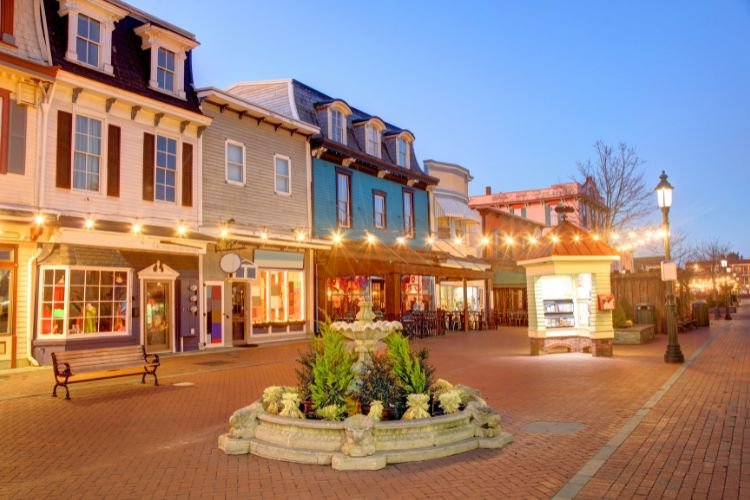
When the beach empties, another town steps forward
Cape May After the Beach: A Town of Artists and Stages
Cape May is easy to mistake for scenery. Its beauty can make the town appear finished, as if no one needs to add another image or story. Artists know better. They return to the same porches, storms, rooms, and social tensions because a familiar place can still contain unanswered questions.
Cape May is easy to mistake for scenery. Its beauty can make the town appear finished, as if no one needs to add another image or story. Artists know better. They return to the same porches, storms, rooms, and social tensions because a familiar place can still contain unanswered questions.
01
The town is already theatrical
Victorian façades create entrances, balconies, and frames. Carriages pass. Guests dress for dinner. Weather changes the lighting with unusual speed. Cape May offers the basic elements of theater before a performance begins.
Yet art is more than atmosphere. A stage can question the nostalgia sold outside its doors. A painting can reveal work behind leisure. The strongest local culture does not merely decorate the resort. It helps the resort see itself.
02
Performance extends the day
Beach travel often loses energy after sunset or in rain. Theater gives the evening a center. It asks visitors to sit together, listen, and share time that cannot be scrolled or postponed.
Choose a performance before building dinner. Allow time to park and find the entrance. Read age guidance. Arrive early enough to settle without disturbing others. A small theater depends on the care of its audience as much as a grand hall does.
03
Galleries reward the slow eye
A gallery visit changes the scale of attention. After broad horizons and ornate houses, a visitor stands close to one surface. Brushwork, paper, clay, glass, or photograph makes a private argument about place.
Ask questions when the gallery invites them. Do not photograph work without permission. Learn whether the artist is local or whether the subject belongs to the region. Buying even a small work supports a cultural economy that cannot live on applause alone.
04
History becomes story
Cape May’s documented past offers abundant material, but artists must choose how to shape it. Whose voice leads? Which silence becomes visible? Museums and archives establish evidence. Theater and literature can give evidence emotional form without replacing fact.
A thoughtful visitor can move between both. Read the historical marker. Take the museum tour. Then attend the play or listen to the story. The difference between record and interpretation becomes part of the pleasure.
05
Season changes the cultural room
Summer brings large audiences and busy streets. Fall supports festivals and longer evenings. Winter creates intimacy, when a performance or exhibition may feel like a gathering of the town rather than an attraction added to it.
Check calendars early, especially outside peak season. Programs may run only on certain weekends. A cultural event can become the reason for the trip, with beach and dining arranged around it rather than the other way around.
06
Take something home that is not a souvenir
A good performance changes the walk back to the hotel. A painting changes how the next morning’s light looks. This is the gift of art in a beautiful place. It interrupts easy admiration and returns the world with sharper edges.
Leave time after the event. Talk over a quiet drink. Write down one line or image while it remains fresh. Support the artists and organizations whose work gave the town another dimension. The beach will still be there in the morning.
A reader’s field exercise
Carry the story into the streets
Begin with one hour and no ambition to cover the town. Choose a route that fits the subject of this essay. Walk slowly enough to notice a change in light, sound, material, or pace. Write down one detail before taking a photograph. Description trains the eye because it asks you to decide what is actually there.
The town is already theatrical
Find one living example of this idea. Observe without entering private space. Ask what the detail reveals about Cape May, then ask what it leaves unexplained.
Performance extends the day
Find one living example of this idea. Observe without entering private space. Ask what the detail reveals about Cape May, then ask what it leaves unexplained.
Galleries reward the slow eye
Find one living example of this idea. Observe without entering private space. Ask what the detail reveals about Cape May, then ask what it leaves unexplained.
History becomes story
Find one living example of this idea. Observe without entering private space. Ask what the detail reveals about Cape May, then ask what it leaves unexplained.
Season changes the cultural room
Find one living example of this idea. Observe without entering private space. Ask what the detail reveals about Cape May, then ask what it leaves unexplained.
Take something home that is not a souvenir
Find one living example of this idea. Observe without entering private space. Ask what the detail reveals about Cape May, then ask what it leaves unexplained.
Return to the same subject at another hour. Morning and evening reveal different truths. Crowds alter the scale of a street, while rain changes color and sound. Compare what you expected with what the place actually offered. Let the gap remain visible in your notes.
Talk with someone who works in the town when the moment is natural and they have time. Ask one plain question about Cape May arts and theater. Listen for the practical detail that does not appear in a brochure. Do not press for a performance of local knowledge. Courtesy is a better guide than curiosity without limits.
Read one official source after the walk. Separate documented history from local legend and personal impression. All three can enrich a visit, but they should not be confused. Precision does not diminish wonder. It gives wonder a sound foundation.
End somewhere you can sit. Review the notes without trying to turn them into a verdict. A place becomes richer when it resists summary. The goal is not to master Cape May in an afternoon. It is to leave with a better question than the one you brought.
Continue the thought
Use the story to plan a more attentive visit
These practical guides turn the essay’s ideas into routes, choices, and current visitor information.
Use the arts guide · Plan a rainy day · Build a winter culture trip
Source desk
Cape May Stage · East Lynne Theater Company
Historical and operational claims should be checked against the linked institutions. Current schedules can change.
Reader questions
Cape May arts and theater FAQs
Clear answers, with room for the place itself to remain complicated.
Does Cape May have live theater?
Yes. Local companies and venues present seasonal programs. Check current calendars.
Where can I see art?
Galleries, exhibitions, museums, and special events offer visual art.
Should I buy tickets ahead?
Yes for limited runs, weekends, and popular events.
Are performances suitable for children?
Some are. Read age guidance for each production.
Is there arts programming in winter?
There can be, though schedules are smaller. Confirm dates.
The journal continues
Read Cape May with a slower eye
Explore practical guides and original stories about the architecture, coast, food, wildlife, and people that give the town its character.