
Follow the light, not the checklist
A Photographer’s Golden-Hour Route Through Cape May
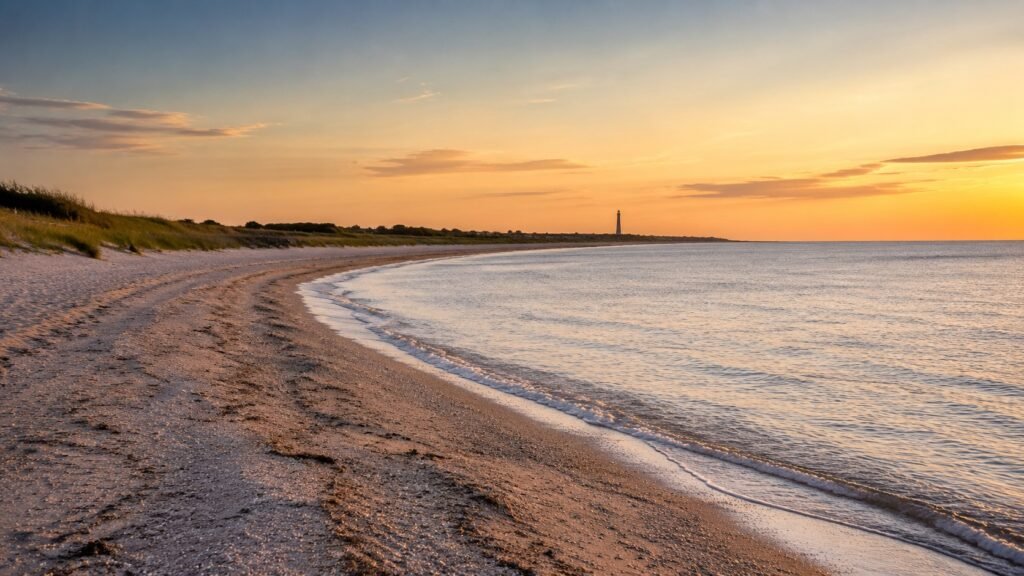
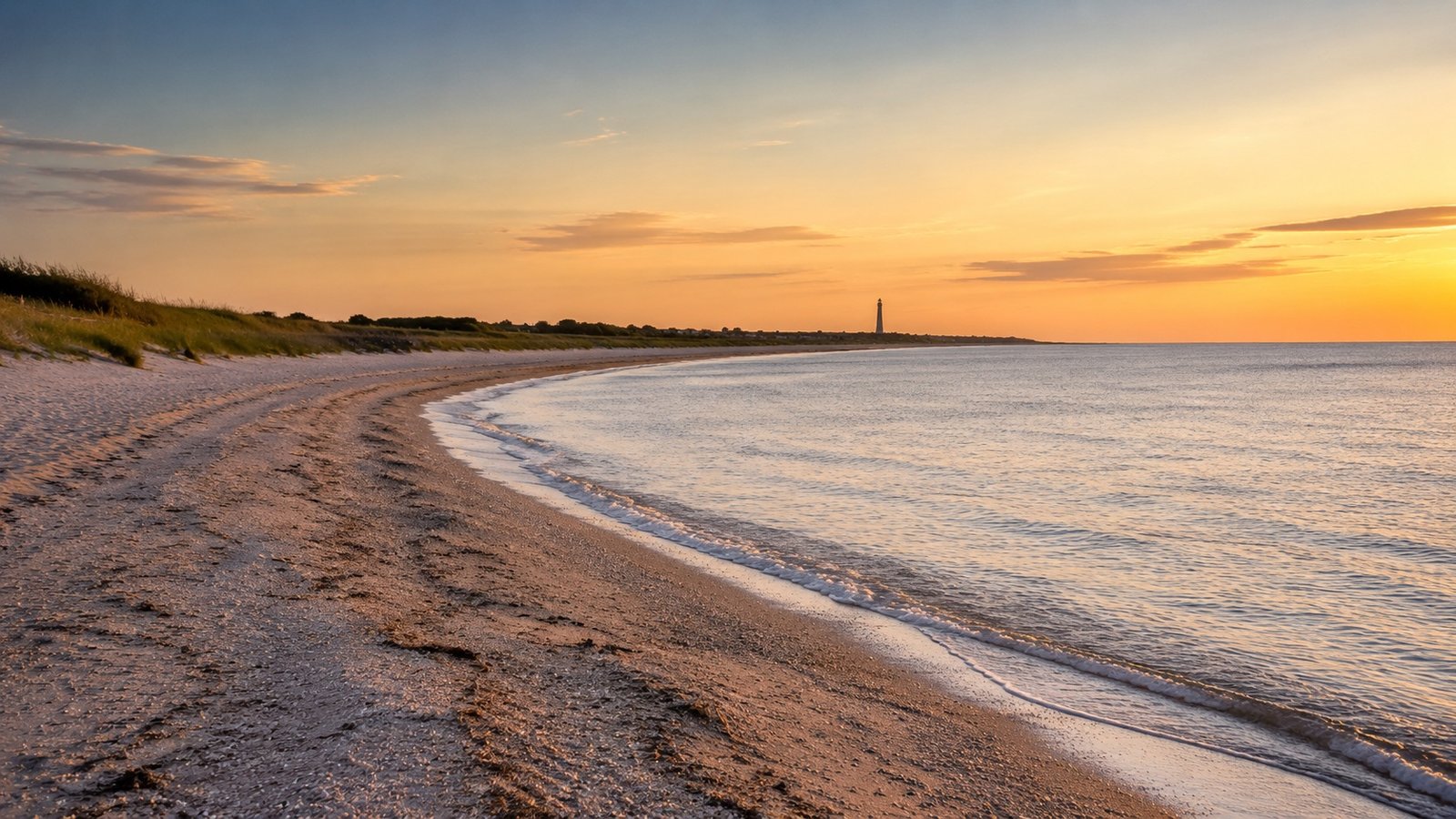
Cape May’s architecture and coastline reward low light because both are built from surfaces. Shingles catch a warm edge. Porch brackets cast longer shadows. Wet sand reflects the sky. A golden-hour route should move with the sun and remain short enough that seeing does not become rushing.
Cape May’s architecture and coastline reward low light because both are built from surfaces. Shingles catch a warm edge. Porch brackets cast longer shadows. Wet sand reflects the sky. A golden-hour route should move with the sun and remain short enough that seeing does not become rushing.
01
Choose one side of the cape
Morning light favors the Atlantic-facing beach and eastward views. Evening draws photographers toward The Cove, Cape May Point, and Delaware Bay. Trying to cross between too many locations can waste the brief interval when light becomes expressive.
Check sunset, cloud cover, wind, tide, and park hours. Golden hour is not guaranteed gold. Overcast weather can give architecture soft color and reduce contrast.
02
Begin with Victorian streets
Start before the strongest light. Walk public sidewalks near the historic center and look for repeating porch columns, rooflines, colored glass, and details lit from the side.
Do not enter private porches, lawns, or gardens. A wide lens does not grant a wider right of access. Keep tripods clear of sidewalks and residents’ paths.
03
Move toward the ocean
The Promenade adds long lines, railings, bicycles, and the scale of hotels against the water. Exposure changes rapidly near sunset, so decide whether the subject is the city, beach, or people.
Watch the horizon and the foreground together. A clean reflection or dune fence can carry more visual weight than a saturated sky.
04
Lighthouse and Point options
Cape May Point State Park offers exterior lighthouse views and varied habitat. New Jersey State Parks permits noncommercial exterior photography subject to rules, while commercial work and drones may require permission.
Stay out of protected areas and obey closures. Wildlife needs distance. A photograph is never worth disrupting a bird, nesting area, or another visitor’s safe passage.
05
After sunset
Blue hour can be richer than the final orange minute. Street lamps, shop windows, and deepening sky give downtown a different register. Use a stable hand position or permitted tripod without blocking movement.
If working near roads, remain visible and cross legally. Cape May is not a studio. Cars, residents, and guests keep moving through the frame.
06
Edit with restraint
Cape May already contains strong color and ornament. Let white balance, contrast, and saturation preserve the hour rather than invent it. Keep enough shadow detail to show material and place.
Caption locations accurately and separate a romantic impression from a factual claim. Responsible photography can invite visitors without teaching them to trespass or crowd fragile sites.
A slower way to carry the story
Leave one hour unclaimed. Walk a route connected with the subject and notice changes in light, sound, material, and pace. Write one clear sentence about what is present. Description disciplines the eye because it resists the easy substitution of mood for fact.
Return to one location at a different hour. Morning and evening do not simply alter a photograph. They change who uses a street, which details become visible, and how the coast sounds. Compare expectation with observation. Let the difference remain in the notes.
When conversation arises naturally, ask a person who works in town one plain question. Listen without asking them to perform local knowledge. Courtesy is a better guide than curiosity without limits, especially in a community that receives visitors every day.
Read one primary source after the walk. Separate documented history, local legend, personal memory, and present-day operations. All can enrich a visit, but they should not be confused. Precision does not diminish wonder. It gives wonder a sound foundation.
End somewhere you can sit. Review the day without forcing it into a verdict. A place becomes richer when it resists summary. The goal is not to master Cape May in an afternoon. It is to leave with a better question than the one you brought.
A reader’s field exercise
Carry four questions into the streets
Choose one side of the cape
Find one visible detail connected with this idea. Describe it before photographing it. Ask what the place reveals and what the first glance leaves unexplained. Then locate the primary source that can test your first impression. Record its date, name the institution responsible for it, and notice where documented fact ends. A careful visitor can enjoy atmosphere without asking atmosphere to serve as proof.
Begin with Victorian streets
Find one visible detail connected with this idea. Describe it before photographing it. Ask what the place reveals and what the first glance leaves unexplained. Then locate the primary source that can test your first impression. Record its date, name the institution responsible for it, and notice where documented fact ends. A careful visitor can enjoy atmosphere without asking atmosphere to serve as proof.
Move toward the ocean
Find one visible detail connected with this idea. Describe it before photographing it. Ask what the place reveals and what the first glance leaves unexplained. Then locate the primary source that can test your first impression. Record its date, name the institution responsible for it, and notice where documented fact ends. A careful visitor can enjoy atmosphere without asking atmosphere to serve as proof.
Lighthouse and Point options
Find one visible detail connected with this idea. Describe it before photographing it. Ask what the place reveals and what the first glance leaves unexplained. Then locate the primary source that can test your first impression. Record its date, name the institution responsible for it, and notice where documented fact ends. A careful visitor can enjoy atmosphere without asking atmosphere to serve as proof.
Stay on public routes. Respect homes, wildlife, posted closures, and the work of local businesses. A more attentive visitor usually becomes a lighter presence.
Plan with confidence
Current information outranks an old list
Hours, prices, menus, transportation, and access can change. Use this story to understand the choice. Use the official source to confirm the final detail for your date.
Reader questions
Cape May photography locations FAQs
Direct answers with links to the institutions that hold the current record.
Where is the best Cape May sunset photo?
Sunset Beach and The Cove are popular, while Cape May Point offers lighthouse and habitat views.
Can I use a tripod?
Rules vary by site and crowd conditions. Never block paths or interfere with operations.
Can I fly a drone at Cape May Point State Park?
Drones are not permitted without a special-use permit under state park rules.
Is commercial photography allowed at the lighthouse?
It requires a special-use permit under the published state rules.
What is the best time for Victorian houses?
Low side light before sunset or after sunrise can reveal texture and ornament.
The journal continues
Read Cape May with a slower eye
Explore original stories and practical guides to the architecture, coast, food, wildlife, and people that give the town its character.