
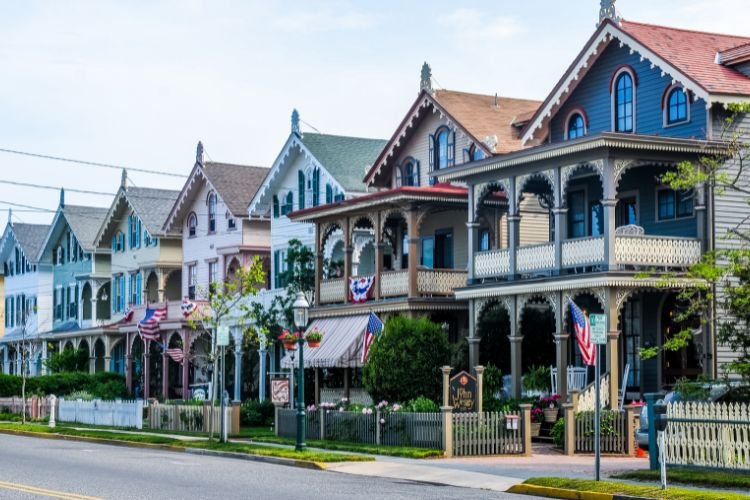
The room that belongs to both house and street
The Cape May Porch: A Room Between Town and Sea
A Cape May porch is never only an entrance. It is a place to wait for weather, greet a neighbor, dry after the beach, or listen as carriage wheels pass. The finest porches make idleness feel like attention. They teach a visitor that a town can be understood from one chair.
A Cape May porch is never only an entrance. It is a place to wait for weather, greet a neighbor, dry after the beach, or listen as carriage wheels pass. The finest porches make idleness feel like attention. They teach a visitor that a town can be understood from one chair.
01
Built for air
Before mechanical cooling, shade and moving air shaped summer comfort. Deep porches protected windows from direct sun. Open railings and broad openings let breezes pass. The architecture did not defeat heat, but it made the day more habitable and gave household life a place beyond enclosed rooms.
Notice the porch’s direction. Watch when shade reaches the chairs. Feel whether air moves at the corner. Compare a shallow entrance porch with a veranda that wraps two sides. Climate is written into these dimensions, even after air conditioning has changed the way rooms are used.
02
A theater with no curtain
Porch life is partly public and partly private. The sitter watches the street, but the street also sees the sitter. Cape May’s porches turn ordinary gestures into town life. Reading, talking, and holding a cold drink become small scenes framed by columns and railings.
That visibility calls for courtesy. Admire from the sidewalk. Do not climb steps for a photograph unless the property welcomes visitors. Keep voices low on residential blocks. The pleasure of porch culture depends on an old agreement between observation and restraint.
03
Hospitality begins outside
Hotels and inns use porches as a first act of welcome. A guest can arrive before being ready to enter. Luggage settles. The town comes into focus. At breakfast or evening, the porch allows strangers to share a view without demanding conversation.
When choosing lodging, ask how the porch is used. Some are open to all guests. Others belong to certain rooms or restaurants. Street-facing seats can be lively, while side porches may be quiet. The photograph sells atmosphere. The policy determines whether you can inhabit it.
04
Weather makes the room
A porch is most vivid when weather arrives. Rain drums overhead. Wind carries salt and the smell of wet pavement. Heat loosens after sunset. Unlike an interior room, the porch does not erase conditions. It gives them a frame and a roof.
Bring a light layer and let the evening turn. Watch clouds without standing on an exposed beach. Move inside during lightning or dangerous wind. The porch offers intimacy with weather, not immunity from it. Safety remains the wiser form of romance.
05
The discipline of doing less
Modern travel often confuses value with volume. A visitor collects attractions, meals, and photographs until the day is full. Porch time resists that arithmetic. Nothing may happen, yet the town becomes more specific. You hear bicycles, gulls, screen doors, and the changing weight of traffic.
Set aside half an hour without a phone. Read one chapter. Write a postcard. Watch how people carry beach chairs at the end of day. The exercise is not nostalgia. It is attention, which may be the oldest luxury Cape May still offers.
06
Keeping the porches alive
Old porches require constant care. Water finds joints. Salt wears paint. Decorative parts need skilled repair. Preservation succeeds when buildings remain useful enough to support that labor and when changes respect the scale of the whole house.
Guests take part through the places they choose and the way they behave. Stay in cared-for historic properties. Learn the story behind a restoration. Support preservation organizations. Treat every private porch as someone else’s room, even when its beauty belongs to the street.
A reader’s field exercise
Carry the story into the streets
Begin with one hour and no ambition to cover the town. Choose a route that fits the subject of this essay. Walk slowly enough to notice a change in light, sound, material, or pace. Write down one detail before taking a photograph. Description trains the eye because it asks you to decide what is actually there.
Built for air
Find one living example of this idea. Observe without entering private space. Ask what the detail reveals about Cape May, then ask what it leaves unexplained.
A theater with no curtain
Find one living example of this idea. Observe without entering private space. Ask what the detail reveals about Cape May, then ask what it leaves unexplained.
Hospitality begins outside
Find one living example of this idea. Observe without entering private space. Ask what the detail reveals about Cape May, then ask what it leaves unexplained.
Weather makes the room
Find one living example of this idea. Observe without entering private space. Ask what the detail reveals about Cape May, then ask what it leaves unexplained.
The discipline of doing less
Find one living example of this idea. Observe without entering private space. Ask what the detail reveals about Cape May, then ask what it leaves unexplained.
Keeping the porches alive
Find one living example of this idea. Observe without entering private space. Ask what the detail reveals about Cape May, then ask what it leaves unexplained.
Return to the same subject at another hour. Morning and evening reveal different truths. Crowds alter the scale of a street, while rain changes color and sound. Compare what you expected with what the place actually offered. Let the gap remain visible in your notes.
Talk with someone who works in the town when the moment is natural and they have time. Ask one plain question about Cape May porch culture. Listen for the practical detail that does not appear in a brochure. Do not press for a performance of local knowledge. Courtesy is a better guide than curiosity without limits.
Read one official source after the walk. Separate documented history from local legend and personal impression. All three can enrich a visit, but they should not be confused. Precision does not diminish wonder. It gives wonder a sound foundation.
End somewhere you can sit. Review the notes without trying to turn them into a verdict. A place becomes richer when it resists summary. The goal is not to master Cape May in an afternoon. It is to leave with a better question than the one you brought.
Continue the thought
Use the story to plan a more attentive visit
These practical guides turn the essay’s ideas into routes, choices, and current visitor information.
Find a Victorian stay · Walk the district · Visit in softer weather
Source desk
National Park Service Cape May history
Historical and operational claims should be checked against the linked institutions. Current schedules can change.
Reader questions
Cape May porch culture FAQs
Clear answers, with room for the place itself to remain complicated.
Why are porches common in Cape May?
They provide shade, ventilation, outdoor living space, and a social connection to the street.
Can visitors sit on hotel porches?
Often, if they are guests or customers. Policies vary.
May I photograph private porches?
Photograph from public space without entering property or disturbing residents.
What is the best time for porch sitting?
Morning and early evening often bring softer light and cooler air.
How are old porches preserved?
Regular maintenance and skilled repair protect wood, paint, structure, and historic detail.
The journal continues
Read Cape May with a slower eye
Explore practical guides and original stories about the architecture, coast, food, wildlife, and people that give the town its character.