
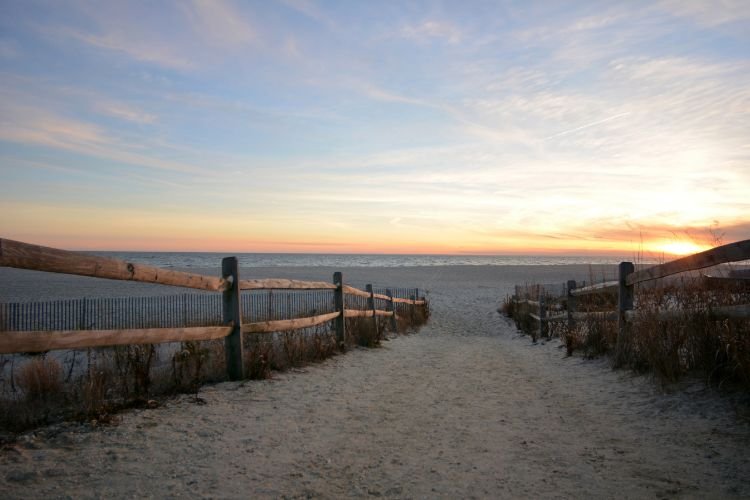
A town shaped by the journey to the sea
How Cape May Became an American Seaside Resort
Cape May’s history begins with geography. The peninsula narrows until land meets two great bodies of water. That position drew mariners, workers, naturalists, and eventually generations of summer visitors. The resort grew from a simple desire that still feels modern: to leave ordinary life and breathe beside the sea.
Cape May’s history begins with geography. The peninsula narrows until land meets two great bodies of water. That position drew mariners, workers, naturalists, and eventually generations of summer visitors. The resort grew from a simple desire that still feels modern: to leave ordinary life and breathe beside the sea.
01
The promise at the end of the road
Early travel to the cape required intention. Water routes and later rail connections turned distance into anticipation. The difficulty of arrival made the shore feel separate from daily life. Visitors came for air, bathing, company, and the social performance of resort life.
Think of the journey as part of the product. A resort is not only beds near a beach. It is a controlled change of pace. Cape May’s position at the end of New Jersey gave that change a physical form that no advertisement needed to invent.
02
Hotels made a temporary city
Large hotels gathered strangers under one roof and gave the season a public rhythm. Dining rooms, verandas, parlors, and promenades created spaces to see and be seen. Smaller boarding houses and private homes served other budgets and temperaments. Together they formed an economy around temporary residence.
The hotel altered the town beyond its walls. Kitchens needed food. Rooms needed labor. Guests wanted transport, entertainment, clothing, and excursions. Resort history must therefore include workers and year-round residents, not only the people pictured in summer dress.
03
Fire and the grammar of rebuilding
Nineteenth-century resort towns were vulnerable to fire. Dense wooden buildings, wind, and limited firefighting capacity could transform streets quickly. Cape May’s major fires destroyed property and also opened space for new construction during the Victorian era.
It is tempting to tell rebuilding as a neat triumph. The truth was harder. Owners lost livelihoods. Workers rebuilt under pressure. Fashion changed the look of the streets. The surviving district is beautiful partly because disaster and reinvestment compressed so much building into a visible period.
04
Competition changed the town
New resorts, changing transportation, and new ideas of leisure challenged Cape May’s position. The town did not remain dominant by standing still. It adapted through different lodging, events, preservation, and the appeal of architecture that later generations learned to value.
Every resort competes with the visitor’s imagination. Cape May could not offer the same amusement scale as larger boardwalk towns. Its eventual strength came from distinction: a walkable historic city, an Atlantic beach, and a quiet elegance that improved as other places chased novelty.
05
Preservation became an economy
Historic buildings survive when people choose repair over replacement and when those choices can be financed. Recognition of Cape May’s architectural importance helped turn preservation into civic identity and visitor appeal. Yet designation alone does not replace roofs, paint wood, or train craftspeople.
The living district is the achievement. Hotels still receive guests. Houses remain homes. Shops occupy old buildings. Preservation works best when it supports use while protecting form, material, and streetscape. The result is not a museum behind glass but a city carrying evidence forward.
06
The old ritual continues
Modern visitors arrive by car and consult phones, yet the central act has changed little. They cross a threshold between ordinary time and shore time. They walk toward water. They dress for dinner. They sit outside after dark and listen to a place settling.
History matters because it gives depth to that ritual. The beach day joins centuries of resort behavior. The hotel porch belongs to an architectural and social tradition. Cape May’s past is not separate from the holiday. It is the structure that lets the holiday feel unlike anywhere else.
A reader’s field exercise
Carry the story into the streets
Begin with one hour and no ambition to cover the town. Choose a route that fits the subject of this essay. Walk slowly enough to notice a change in light, sound, material, or pace. Write down one detail before taking a photograph. Description trains the eye because it asks you to decide what is actually there.
The promise at the end of the road
Find one living example of this idea. Observe without entering private space. Ask what the detail reveals about Cape May, then ask what it leaves unexplained.
Hotels made a temporary city
Find one living example of this idea. Observe without entering private space. Ask what the detail reveals about Cape May, then ask what it leaves unexplained.
Fire and the grammar of rebuilding
Find one living example of this idea. Observe without entering private space. Ask what the detail reveals about Cape May, then ask what it leaves unexplained.
Competition changed the town
Find one living example of this idea. Observe without entering private space. Ask what the detail reveals about Cape May, then ask what it leaves unexplained.
Preservation became an economy
Find one living example of this idea. Observe without entering private space. Ask what the detail reveals about Cape May, then ask what it leaves unexplained.
The old ritual continues
Find one living example of this idea. Observe without entering private space. Ask what the detail reveals about Cape May, then ask what it leaves unexplained.
Return to the same subject at another hour. Morning and evening reveal different truths. Crowds alter the scale of a street, while rain changes color and sound. Compare what you expected with what the place actually offered. Let the gap remain visible in your notes.
Talk with someone who works in the town when the moment is natural and they have time. Ask one plain question about Cape May seaside resort history. Listen for the practical detail that does not appear in a brochure. Do not press for a performance of local knowledge. Courtesy is a better guide than curiosity without limits.
Read one official source after the walk. Separate documented history from local legend and personal impression. All three can enrich a visit, but they should not be confused. Precision does not diminish wonder. It gives wonder a sound foundation.
End somewhere you can sit. Review the notes without trying to turn them into a verdict. A place becomes richer when it resists summary. The goal is not to master Cape May in an afternoon. It is to leave with a better question than the one you brought.
Continue the thought
Use the story to plan a more attentive visit
These practical guides turn the essay’s ideas into routes, choices, and current visitor information.
Explore the Historic District · Stay in a historic inn · Find a history tour
Source desk
National Park Service Cape May history · Cape May MAC
Historical and operational claims should be checked against the linked institutions. Current schedules can change.
Reader questions
Cape May seaside resort history FAQs
Clear answers, with room for the place itself to remain complicated.
Is Cape May America’s oldest seaside resort?
Cape May is widely described as one of the nation’s oldest seaside resorts. Exact superlatives depend on definitions and evidence.
Why are there so many Victorian buildings?
Fire, rebuilding, resort growth, and later preservation left a large concentration from the era.
How did visitors first reach Cape May?
Water routes, roads, and later rail connections brought successive generations.
Why did preservation matter?
It protected architectural character and helped create a distinct modern visitor economy.
Where can I learn more?
Use National Park Service material, Cape May MAC, local museums, and guided tours.
The journal continues
Read Cape May with a slower eye
Explore practical guides and original stories about the architecture, coast, food, wildlife, and people that give the town its character.