
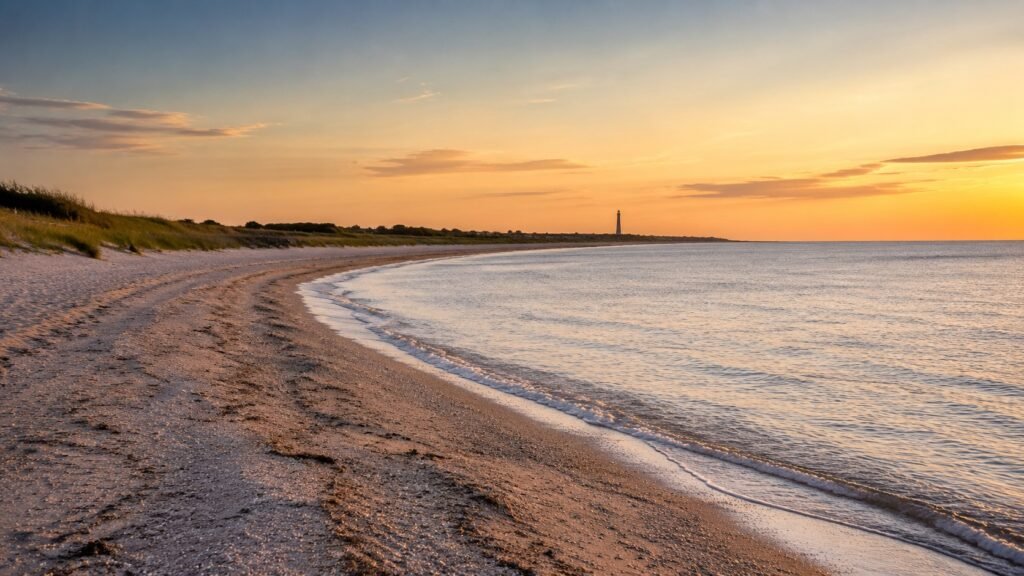
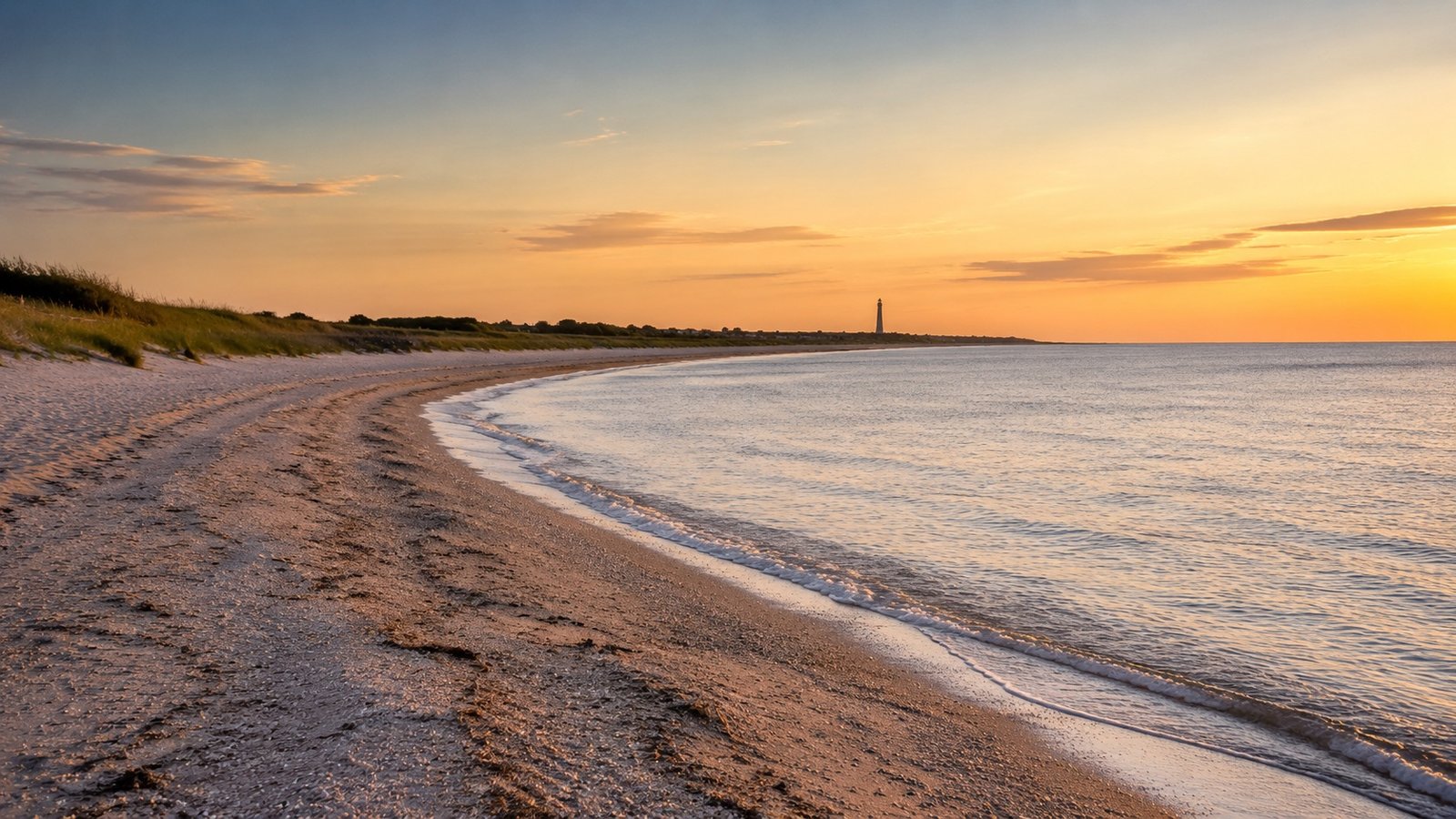
Begin with the Atlantic, finish with the bay
Two Coasts in One Day: Cape May From Sunrise to Sunset
Cape May offers a rare and graceful geography. Morning opens over the Atlantic. Evening closes over Delaware Bay. Between them lies a town small enough to cross in a day and rich enough to make the crossing feel like a journey.
Cape May offers a rare and graceful geography. Morning opens over the Atlantic. Evening closes over Delaware Bay. Between them lies a town small enough to cross in a day and rich enough to make the crossing feel like a journey.
01
Meet the Atlantic before the town wakes
Sunrise strips the beachfront to its essentials. Water, wind, sand, and a pale line of horizon remain before umbrellas and traffic arrive. You do not need a dramatic sky. The quiet itself is the event.
Check the sunrise time and weather before leaving. Use a legal public entrance. Keep clear of dunes and closed areas. Stay well back from rough surf. Bring a warm layer, because even summer mornings can feel cool beside moving water.
02
Let breakfast restore the scale of the day
An early start can make the whole day feel urgent. Breakfast should reverse that feeling. Choose a café or dining room near the next walk. Sit long enough for the town to open around you.
A simple meal works best. Coffee, fruit, eggs, or pastry create energy without turning morning into another appointment. Check hours the night before. Seasonal schedules shift, and the café you imagined may not open every weekday.
03
Cross the historic middle on foot
The route from ocean to town moves quickly from beach hotels to shaded streets. Walk through the Historic District with no demand to identify every style. Notice how houses turn toward sidewalks and how porches hold the edge.
Use the Washington Street Mall as an easy center, then wander one or two quieter blocks. Do not overfill midday. Heat and crowds are strongest then. A museum, porch, lunch, or hotel rest can protect the late afternoon.
04
Follow the land west
Cape May Point and the Delaware Bay side feel different from the Atlantic front. Roads narrow. Habitat becomes more visible. The lighthouse and park can turn the crossing into a lesson in coastline, migration, and navigation.
Group western stops into one drive. Visit the state park, the Point, or West Cape May before continuing toward sunset. Carry water. Confirm closing times. Avoid repeated trips back and forth through traffic.
05
Arrive before the sun performs
Sunset Beach is most satisfying before sunset. The stones, horizon, and remains of the Atlantus need daylight. Early arrival also lowers the stress of parking and gives the sky time to change.
Sunset times move rapidly across the year. Reach the area at least forty-five minutes early on a clear busy evening. Respect the flag ceremony when scheduled. Stand clear of unstable objects and never climb on the concrete ship remains.
06
End without rushing the dark
After sunset, many people move at once. Let the first wave leave if conditions and parking rules permit. Watch color remain after the sun drops. Then choose a calm dinner or return to the porch.
Night driving near walkers and cyclists requires patience. Turn on lights early. Do not stop in travel lanes for a photograph. The day succeeds because its two horizons are joined by attention, not because every minute between them was filled.
A reader’s field exercise
Carry the story into the streets
Begin with one hour and no ambition to cover the town. Choose a route that fits the subject of this essay. Walk slowly enough to notice a change in light, sound, material, or pace. Write down one detail before taking a photograph. Description trains the eye because it asks you to decide what is actually there.
Meet the Atlantic before the town wakes
Find one living example of this idea. Observe without entering private space. Ask what the detail reveals about Cape May, then ask what it leaves unexplained.
Let breakfast restore the scale of the day
Find one living example of this idea. Observe without entering private space. Ask what the detail reveals about Cape May, then ask what it leaves unexplained.
Cross the historic middle on foot
Find one living example of this idea. Observe without entering private space. Ask what the detail reveals about Cape May, then ask what it leaves unexplained.
Follow the land west
Find one living example of this idea. Observe without entering private space. Ask what the detail reveals about Cape May, then ask what it leaves unexplained.
Arrive before the sun performs
Find one living example of this idea. Observe without entering private space. Ask what the detail reveals about Cape May, then ask what it leaves unexplained.
End without rushing the dark
Find one living example of this idea. Observe without entering private space. Ask what the detail reveals about Cape May, then ask what it leaves unexplained.
Return to the same subject at another hour. Morning and evening reveal different truths. Crowds alter the scale of a street, while rain changes color and sound. Compare what you expected with what the place actually offered. Let the gap remain visible in your notes.
Talk with someone who works in the town when the moment is natural and they have time. Ask one plain question about Cape May sunrise and sunset. Listen for the practical detail that does not appear in a brochure. Do not press for a performance of local knowledge. Courtesy is a better guide than curiosity without limits.
Read one official source after the walk. Separate documented history from local legend and personal impression. All three can enrich a visit, but they should not be confused. Precision does not diminish wonder. It gives wonder a sound foundation.
End somewhere you can sit. Review the notes without trying to turn them into a verdict. A place becomes richer when it resists summary. The goal is not to master Cape May in an afternoon. It is to leave with a better question than the one you brought.
Continue the thought
Use the story to plan a more attentive visit
These practical guides turn the essay’s ideas into routes, choices, and current visitor information.
Choose a sunrise beach · Plan Sunset Beach · Use a full day itinerary
Source desk
National Weather Service beach safety · Inside Cape May Sunset Beach guide
Historical and operational claims should be checked against the linked institutions. Current schedules can change.
Reader questions
Cape May sunrise and sunset FAQs
Clear answers, with room for the place itself to remain complicated.
Where is the best sunrise in Cape May?
The Atlantic beachfront offers an open eastern horizon. Choose a legal public entrance.
Where is the best sunset?
Sunset Beach is the classic Delaware Bay location, with other bay views nearby.
Can I do both in one day?
Yes. Cape May’s compact geography makes it practical.
How early should I arrive?
Arrive before the published sunrise or at least forty-five minutes before a busy sunset.
What if clouds cover the horizon?
The changing light and quiet can still be worthwhile. Follow weather safety guidance.
The journal continues
Read Cape May with a slower eye
Explore practical guides and original stories about the architecture, coast, food, wildlife, and people that give the town its character.